Summary
Between Hodgson’s Hierococcyx nisicolor and Malaysian Hawk-Cuckoos H. fugax, a common belief is that grey upperparts and orange-rufous underparts are restricted to adult Hodgson’s Hawk-Cuckoos. Extending this to immatures, it is believed that a rufous wash to the breast (or rufous-outlined brown streaks) is restricted to Hodgson’s, with Malaysian always having dark brown streaks with no rufous outlines on the underparts.
On the other hand, Malaysian Hawk-Cuckoo is said to consistently have brown upperparts and underparts lacking rufous tones in all plumages, whether adult or subadult.
This is not correct, as adult Malaysian Hawk-Cuckoo can also show grey upperparts and bright rufous underparts. Identifying subadult hawk-cuckoos based on rufous-outlined underpart streaking is also dubious because adult birds can be so extensively orange-rufous.
Table 1. Key plumage traits of adult Malaysian and Hodgson’s Hawk-Cuckoos, based on previous work (King, 2002; Foley, 2013; Eaton, 2018; Eaton et al., 2021; Kudus, 2026) and this work.
| Hodgson’s | Malaysian (previous work) | Malaysian (this work) | |
| Underparts | Orange-rufous streaks | Narrow dark brown streaks | Variably brown or orange-rufous streaks, or a mix |
| Upperparts | Slate grey | Rich brown, contrasting with head | Variably brown to slate grey; faint rufous tones on coverts and secondaries may be hard to see |
| Head | Slate grey | Brownish-grey | Variably brownish-grey to slate grey; contrast between head and upperparts may be indistinct or absent |
| Tail | Penultimate tail band narrower than the other tail bands | Penultimate tail band approximately equal-width | Penultimate tail band approximately equal-width |
A lot has been written about this species pair, and hawk-cuckoos in general get a lot of attention due to various identification challenges. As the photos here will illustrate, we are clearly still learning about them.
The two hawk-cuckoos
Hodgson’s and Malaysian Hawk-Cuckoos are difficult to identify in immature plumages. The tail bands are the only reliable feature separating the two, with Hodgson’s having a narrower penultimate tail band. Not all the photos below are of immature birds, but the tail pattern appears consistent across ages.
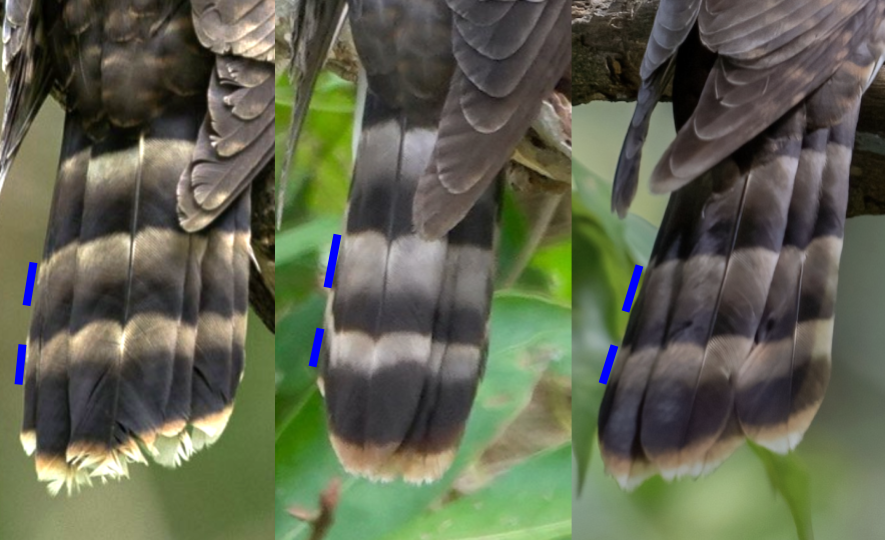
Figure 1. The last two pale tail bands are approximately equal-width in Malaysian Hawk-Cuckoo. Photo credit (L-R): Francis Yap, Ramesh T, Jared Tan.
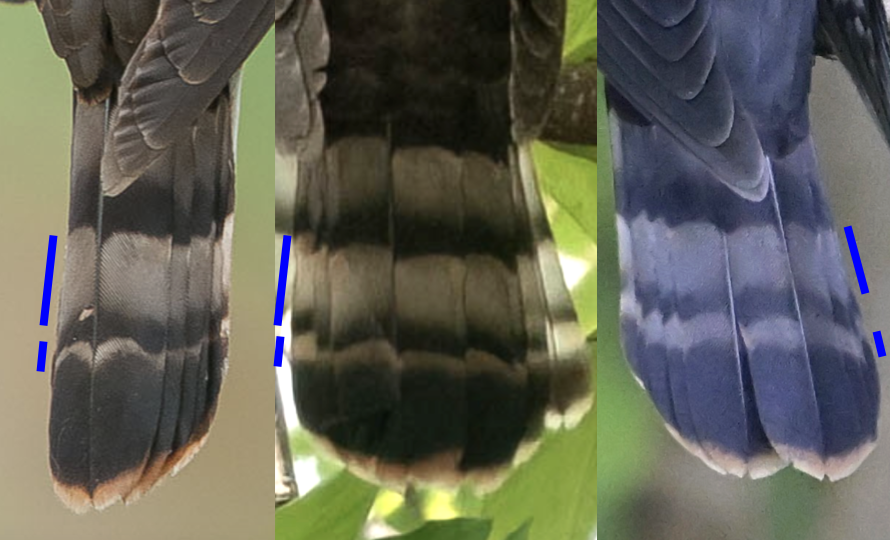
Figure 2. The last pale tail band is narrower in Hodgson’s Hawk-Cuckoo. Photo credit (L-R): Mohamad Zahidi Hamid, Francis Yap, Wai Heng Lua.
Adult plumages are often thought to be easier to separate. Other than the tail bands, major regional field guides describe Malaysian as having brown streaks on the underparts with a pure white background to the brown streaks. Additionally, the upperparts of adult Malaysian is said to be brown with no grey tones, while Hodgson’s is slate-grey. King (2002) described adult Malaysian as having a “modified immature plumage”, compared to adult Hodgson’s, which has a “completely different” plumage from the immature. These (incorrect) beliefs have seemingly not changed since his descriptions.
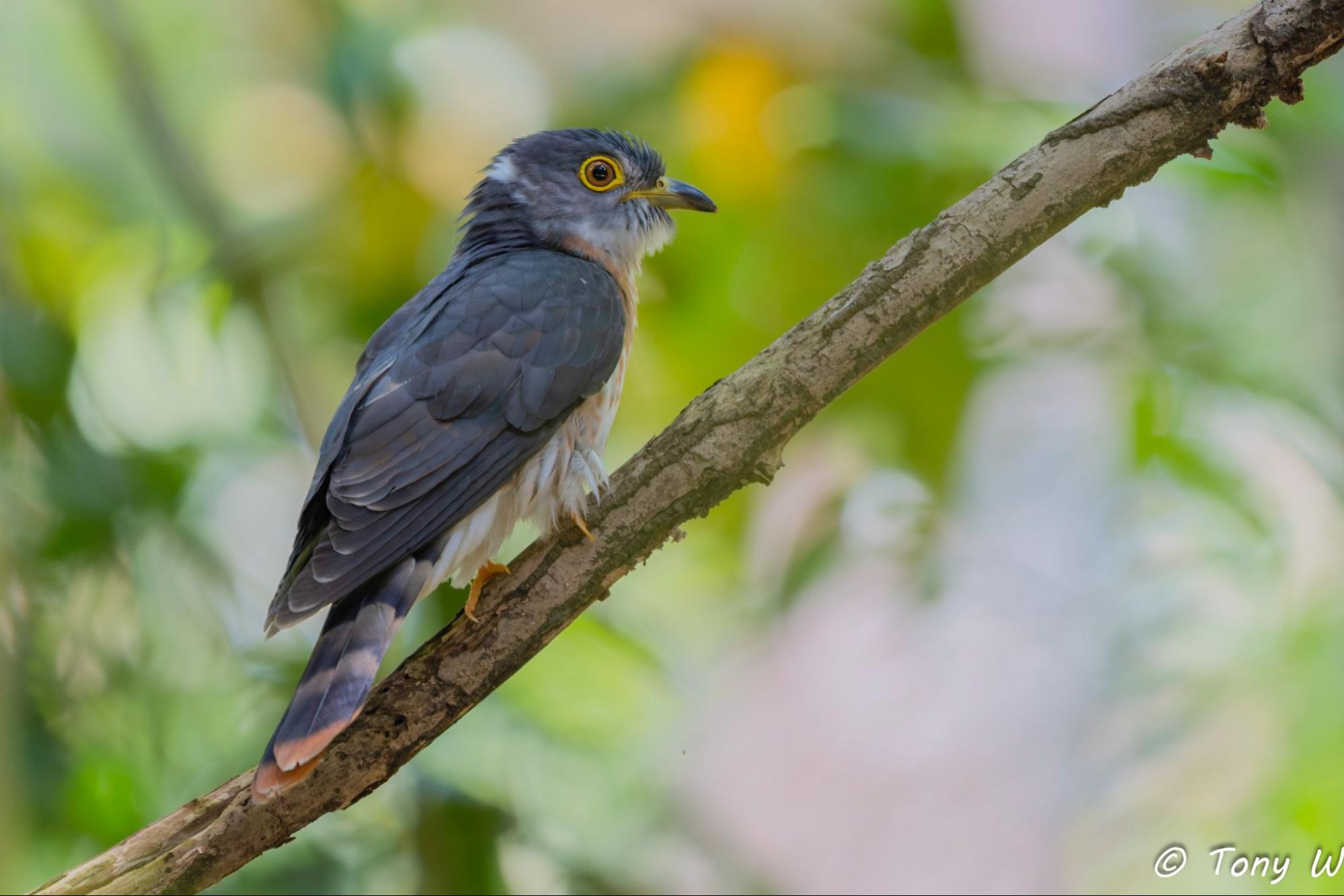
Tony Wong recently shared a series of photos and audio recordings of an unusual-looking hawk-cuckoo at Upper Peirce Reservoir Park. The frequency of the bird’s song, documented in the eBird checklist, identified it as a Malaysian Hawk-Cuckoo, but the plumage was unusual because of how bright orange-rufous the underparts were.
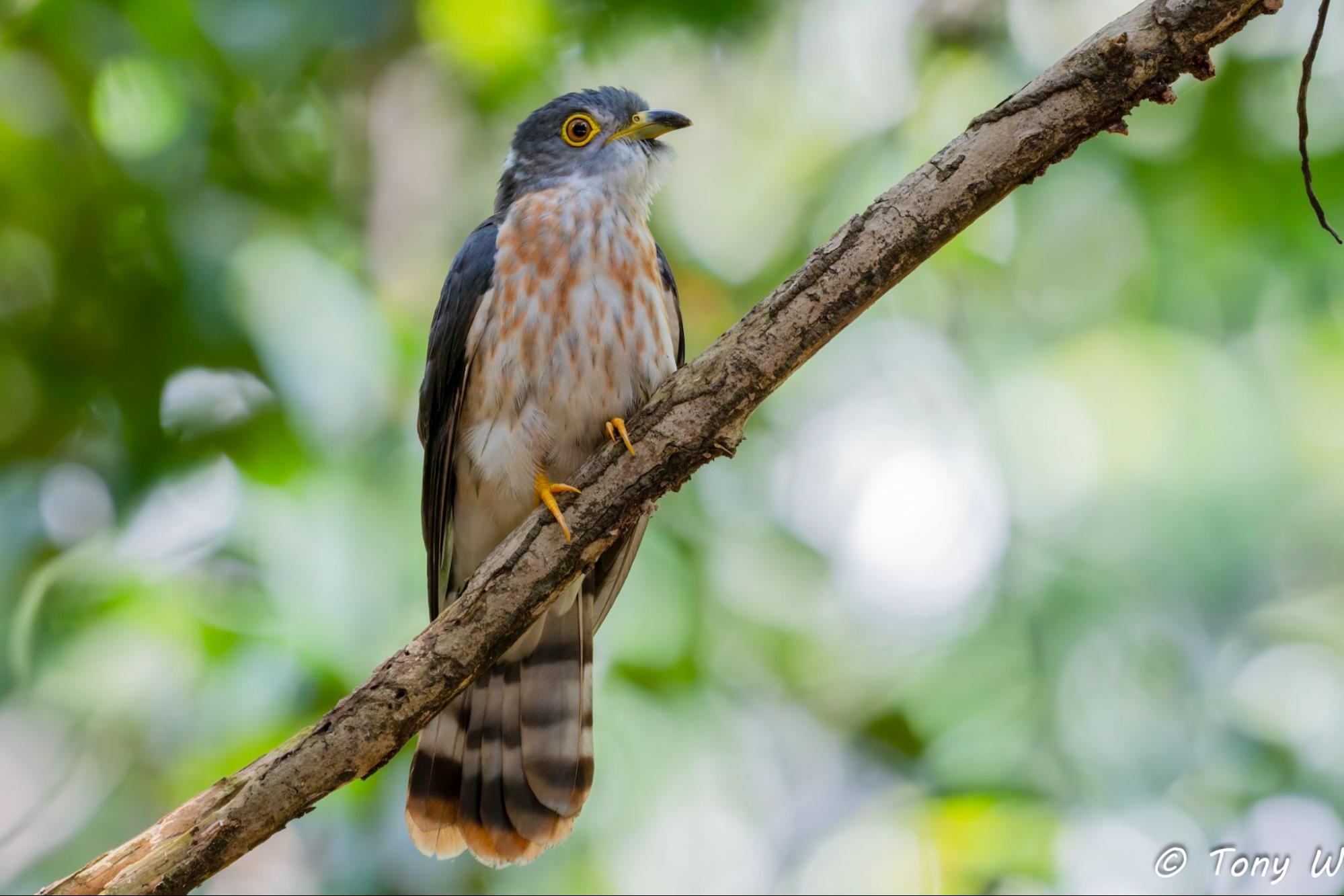
Figures 3 and 4. Malaysian Hawk-Cuckoo at Upper Peirce Reservoir Park, 18 Apr 2026. Up to two birds were recorded in the area in Apr and May. Photo credit: Tony Wong
The underparts are streaked orange-rufous and the upperparts are mostly slate-grey, with the exception of some faint rufous tones to the coverts and secondaries. There is no contrast between the head and the rest of the upperparts. If not for the view of the tail bands in the second photo and the vocalizations, which made the identification clear, this could easily have been identified as an adult Hodgson’s Hawk-Cuckoo based on the plumage.
Photos from elsewhere in the region during the breeding season also suggest grey upperparts and/or rufous underparts are typical in adult Malaysian Hawk-Cuckoo.
- Hala-Bala, Southern Thailand, Feb 2024 (vocalizing bird) – grey upperparts and faint orange tones on breast
- Hala-Bala, Southern Thailand, Aug 2023 (vocalizing bird) – grey upperparts and orange-rufous tones on breast
- Sungei Congkak, Peninsular Malaysia, Apr 2021 (vocalizing bird) – grey upperparts and orange-rufous tones on breast
Admittedly, none of these birds are anywhere near as bright orange as the one from Singapore. This could explain why the published descriptions do not account for the full range of variation we see in this poorly-known species.
This also implies that identifying immature Hodgson’s based on rufous tones in the underparts – often suggested as a diagnostic feature – is also incorrect. If adult Malaysian can be rufous or even extensively orange-rufous, the immature plumage is likely also similarly variable, and immatures which have moulted some or all of their underpart feathers could also be rufous.
In fact, Tony’s photos of a Malaysian Hawk-Cuckoo at the same location last year, show the dark brown streaks with orange-rufous outlines which we commonly associate with immature Hodgson’s. Again, the vocalizations of this bird, documented in the eBird checklist, clearly indicate this is a Malaysian Hawk-Cuckoo.
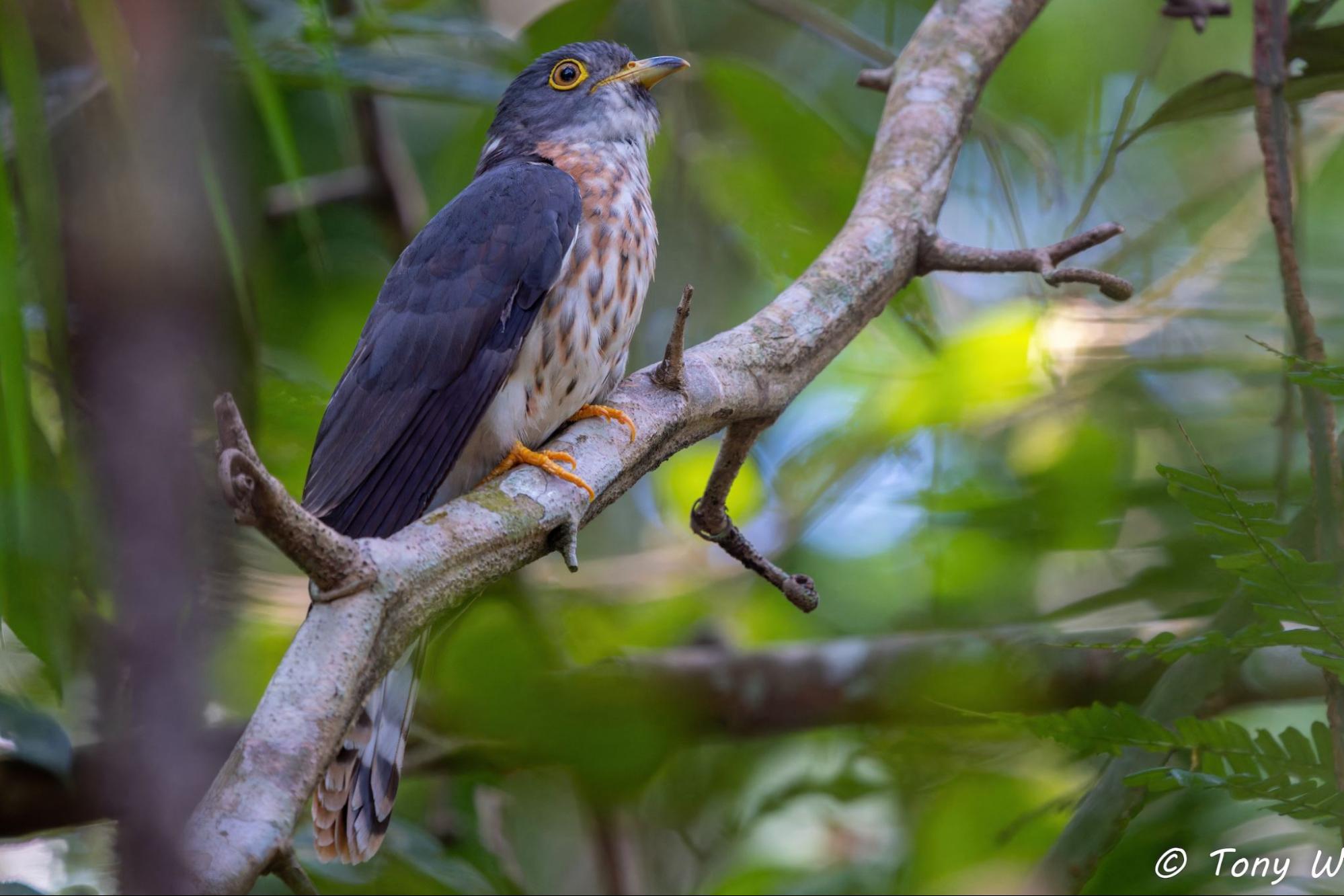
Figure 5. Malaysian Hawk-Cuckoo at Upper Peirce Reservoir Park, 10 Apr 2025. Photo credit: Tony Wong
We’re left with only one diagnostic feature remaining to separate these two species in all plumages – the width of the penultimate tail band.
Acknowledgments
Tony Wong first shared photos of a “Hodgson’s-like” Malaysian Hawk-Cuckoo in 2025, and again this year. Without these observations and the photos, this article would not have been written. Keita Sin and Dillen Ng provided comments on this work.
References
Eaton, J. A. (2018). Identification of Hierococcyx hawk cuckoos, and the first record of Northern Hawk Cuckoo (Hierococcyx hyperythrus) for continental South-East Asia. BirdingASIA, 30, 68–73. Link
Eaton, J. A., van Balen, B., Brickle, N. W., & Rheindt, F. E. (2021). Birds of the Indonesian Archipelago: Greater Sundas and Wallacea (2nd ed.). Lynx Edicions.
Foley, C. (2013). A photo guide to the ID of Malaysian & Hodgson’s hawk-cuckoos. Con Foley Photography.Link
King, B. F. (2002). The Hierococcyx fugax (Hodgson’s Hawk Cuckoo) complex. Bulletin of the British Ornithologists’ Club, 122(2), 74–80. Link
Kudus, M. R. (2026). Identification features of Hierococcyx hawk-cuckoos in Peninsular Malaysia. Malaysian Bird Report, 2(2026), 84–92. Link