Copper-throated Sunbird and Short-tailed Babbler at Singapore Botanic Gardens; Chestnut-bellied Malkoha at Rochor; Chestnut-winged Babbler at Gardens by the Bay; Red-crowned Barbet at Jurong Lake Gardens.
Are alarm bells ringing in your head? If they are, that means you know that these species are restricted to certain parts of the country. Yes, birds have wings and can fly, but the likelihood of encountering some species of birds in some parts of our island is very small or even close to zero. This patchy distribution can be due to habitat fragmentation as a result of urban development, the birds’ reliance on certain types of habitats, or their reluctance to disperse across unfavourable landscapes. In fact, this would actually apply to most species in Singapore, with the exception of ubiquitous species such as Javan Mynas, Rock Pigeons and House Crows which can be seen anywhere on the island—but even these species have their preference of habitat!
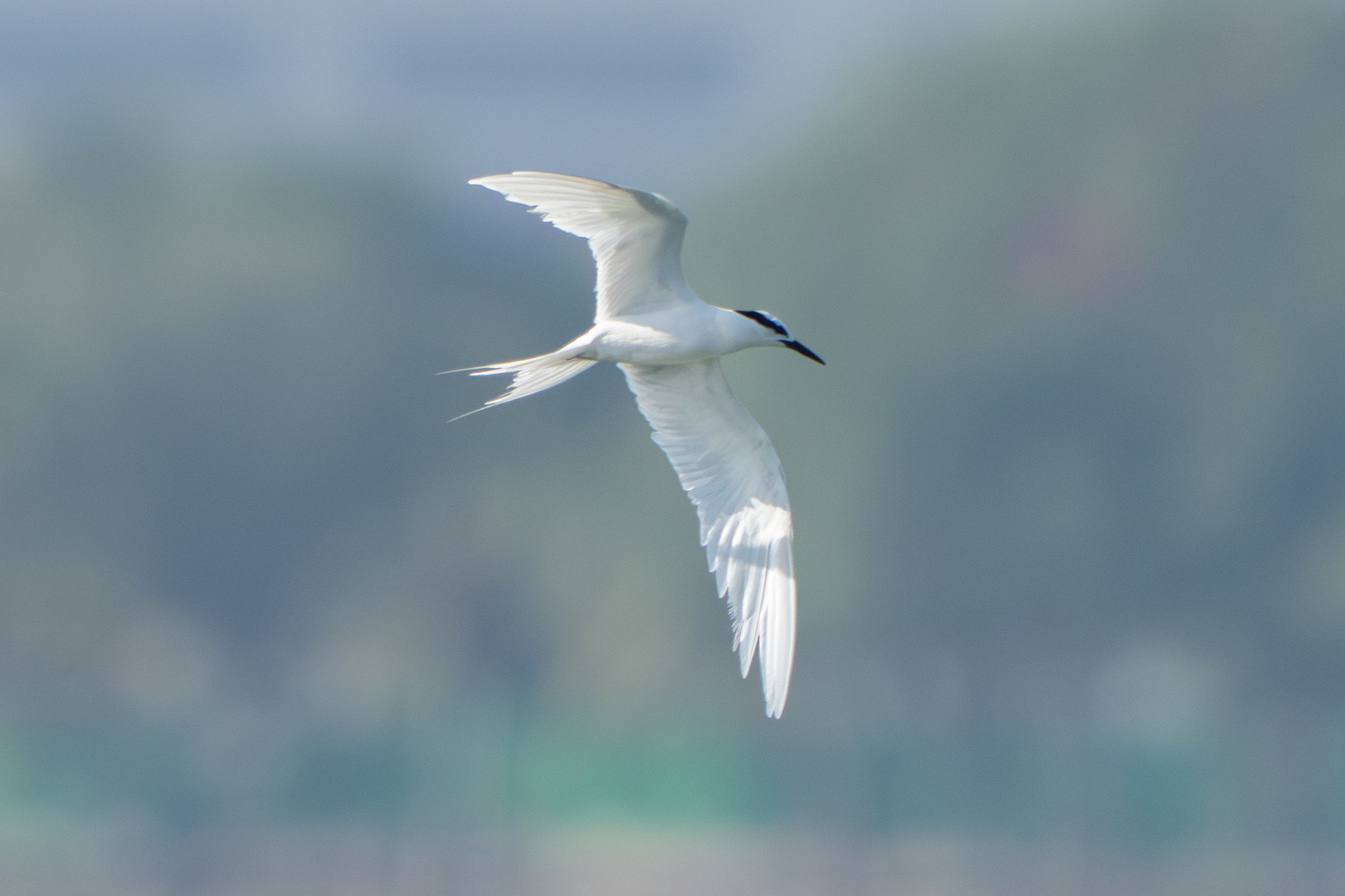
For example, while species such as Little Tern, White-winged Tern, Whiskered Tern and Common Sandpiper can be found along freshwater waterbodies, some species are strictly coastal, such as Black-naped Tern, Bridled Tern, and Malaysian Plover. A sighting of the latter three species somewhere inland would be highly unlikely.
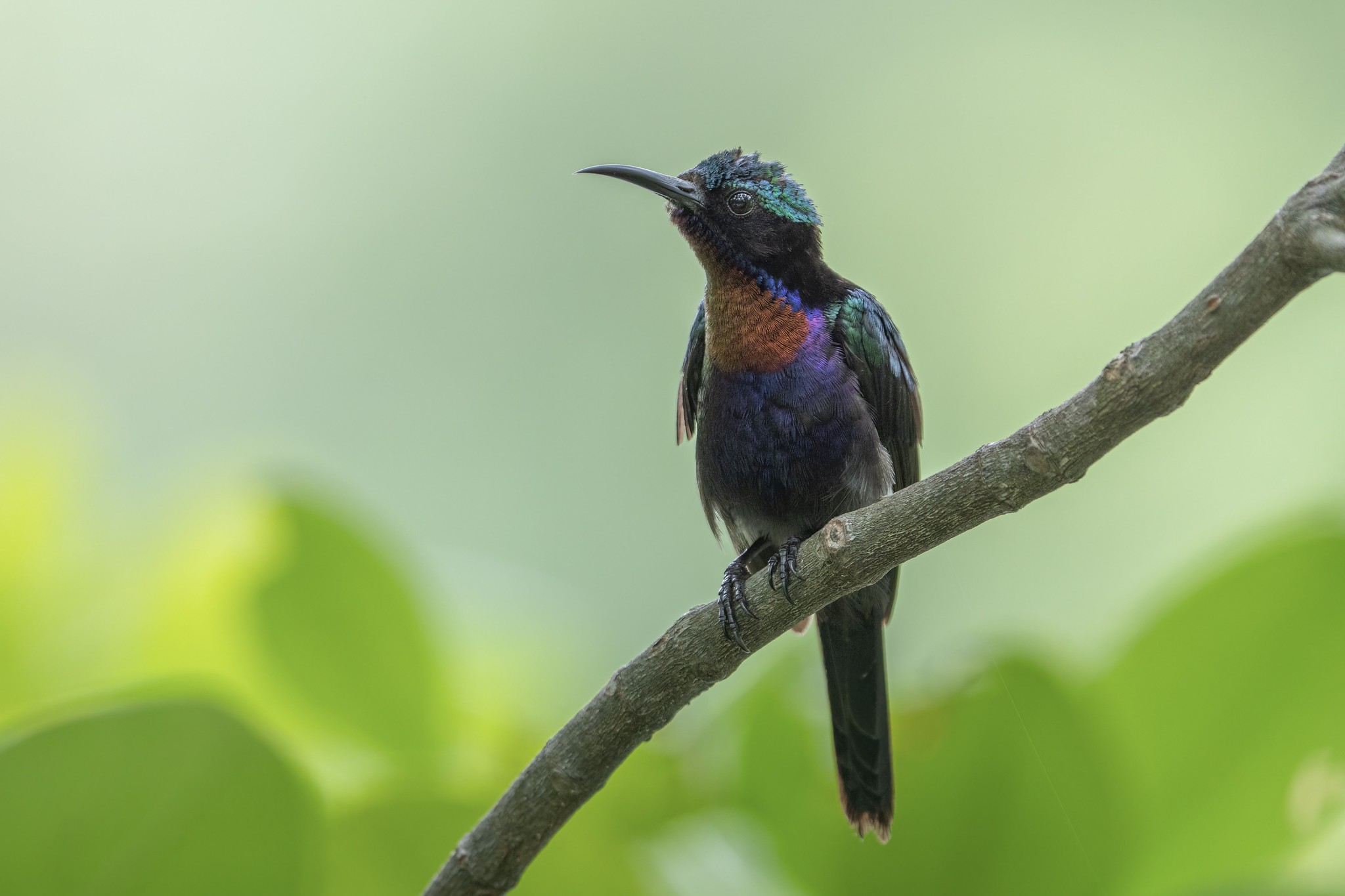
Another example is Copper-throated Sunbird which is a mangrove specialist and can only be reliably found in sites like Pulau Ubin and Sungei Buloh Wetland Reserve, with occasional sightings at places like Pasir Ris Park and more recently West Coast Park. A sighting at inland locations without mangroves such as Singapore Botanic Gardens would be unusual.
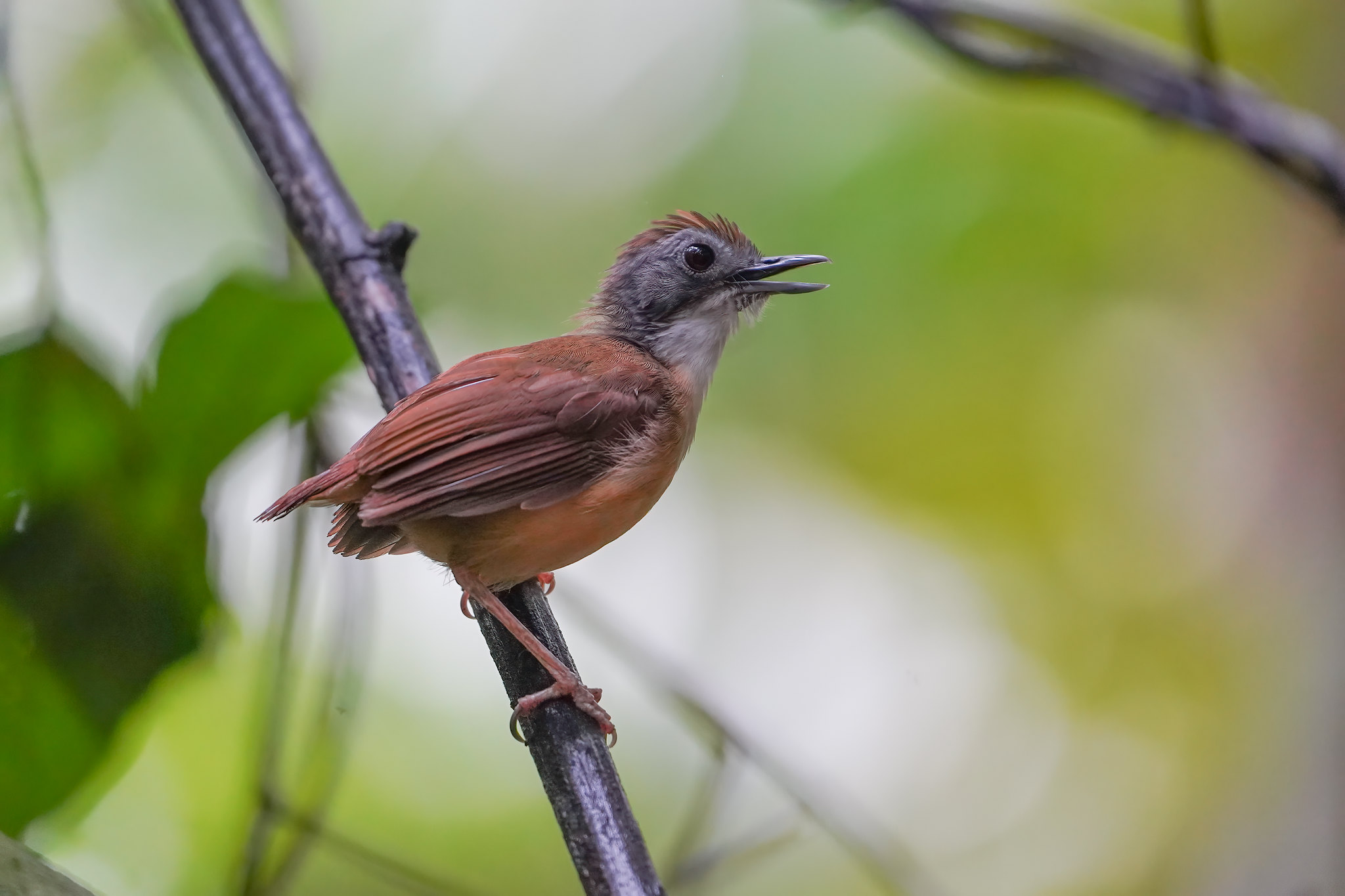
Several species are largely only found in our central forests—Central Catchment Nature Reserve (CCNR) and Bukit Timah Nature Reserve (BTNR), home to Blue-rumped Parrot, Red-crowned Barbet, Chestnut-winged Babbler, Short-tailed Babbler, Cream-vented Bulbul, Red-eyed Bulbul, Blue-winged Leafbird, Greater Green Leafbird, Little Spiderhunter and Chestnut-bellied Malkoha. Some such as Chestnut-winged Babbler have declined over years and have become even more scarce as they are now only found in the CCNR despite historically also being found in BTNR. As such, sightings of these species out of their usual known locations in Singapore need to be supported with good documentation of descriptions, photos, videos or audio recordings.
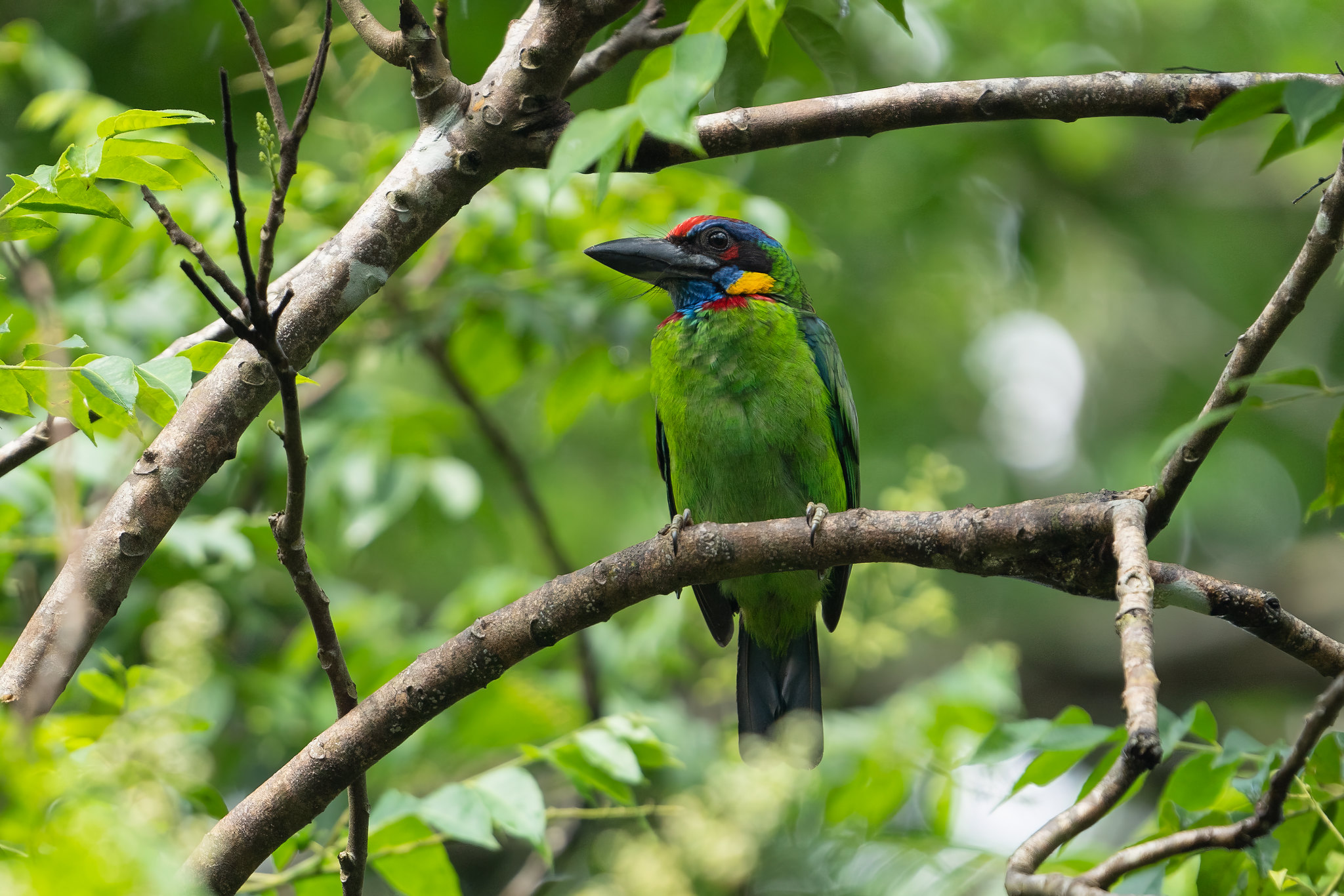
All this is not to say that such species cannot be found out of their usual areas. Thanks to the contributions of all of you in the birding community, we have had confirmed sightings of species in unexpected areas such as Red-eyed Bulbul at Pulau Ubin, Chestnut-bellied Malkoha at Nanyang Technological University, and Blue-rumped Parrot at the Botanic Gardens.
On eBird, we do our best to set filters to flag out sightings based on each species’ rarity, the time of the year that they are expected to be seen, and the expected number of individuals. When we set the filter to 0, it means that any number of that species above 0 reported in a checklist will immediately be flagged for review. For example, the filter for White-bellied Erpornis is set at 0 year-round so that any sighting of this very rare visitor will be assessed. The filter for Whiskered Tern is set at 5 from 15 Sep to 31 Oct, which is the time of the year when this species passes through our waters annually, and at 0 for the remaining parts of the year when it is rarely seen.
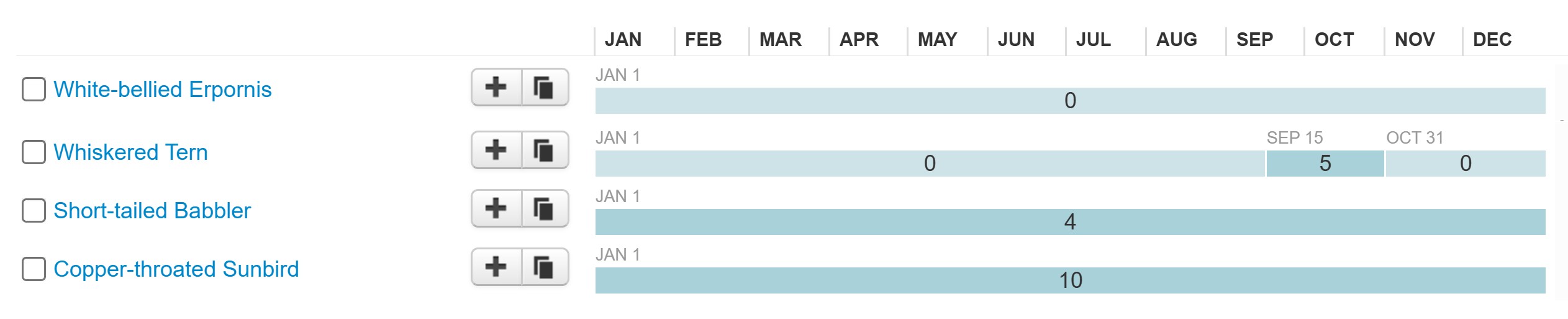
As many of you may already be familiar with, the eBird Rare Bird Alert (RBA) is a useful tool for you to keep updated with the latest rarities reported on eBird—be it rarities year-round, or rarities for a certain time of the year. Any species with a filter set at 0 will show up on the RBA during that time of the year and be subject to review.
Now here’s the main issue—many of these species, while restricted to certain locations in Singapore, are still common enough in the areas where they are usually found. For example, during a walk through the Central Catchment forest to Jelutong Tower at the right season, you are almost guaranteed to hear Red-crowned Barbet calling away, and it is common to see Cream-vented and Red-eyed Bulbuls flying around the tower. On a trip to Sungei Buloh Wetland Reserve, you will almost definitely encounter a Copper-throated Sunbird. Although these species would be considered extremely rare out of their usual locations, it would not make sense for the filter for these species to be set as 0, as that would flood the RBA with common sightings and make the workload of the moderators unnecessarily heavy.
Bigger countries have state or county level filters, but such a system doesn’t exist within the small spatial scale of Singapore. This means that while the filters for species only found in certain parts of Singapore are set above 0 (for example 4 for Short-tailed Babbler and 10 for Copper-throated Sunbird), there is no way for us to ensure that sightings at unusual locations are flagged for review apart from periodically going to eBird to manually check the data.
During these checks, we find that many of such species in Singapore have a multitude of likely misreported sightings, either due to misidentification or errors in checklist entry. To solve this, our team has meticulously gone through (and will continue to go through) the data to work and filter through each sighting and request for more information and documentation from the observers where possible.
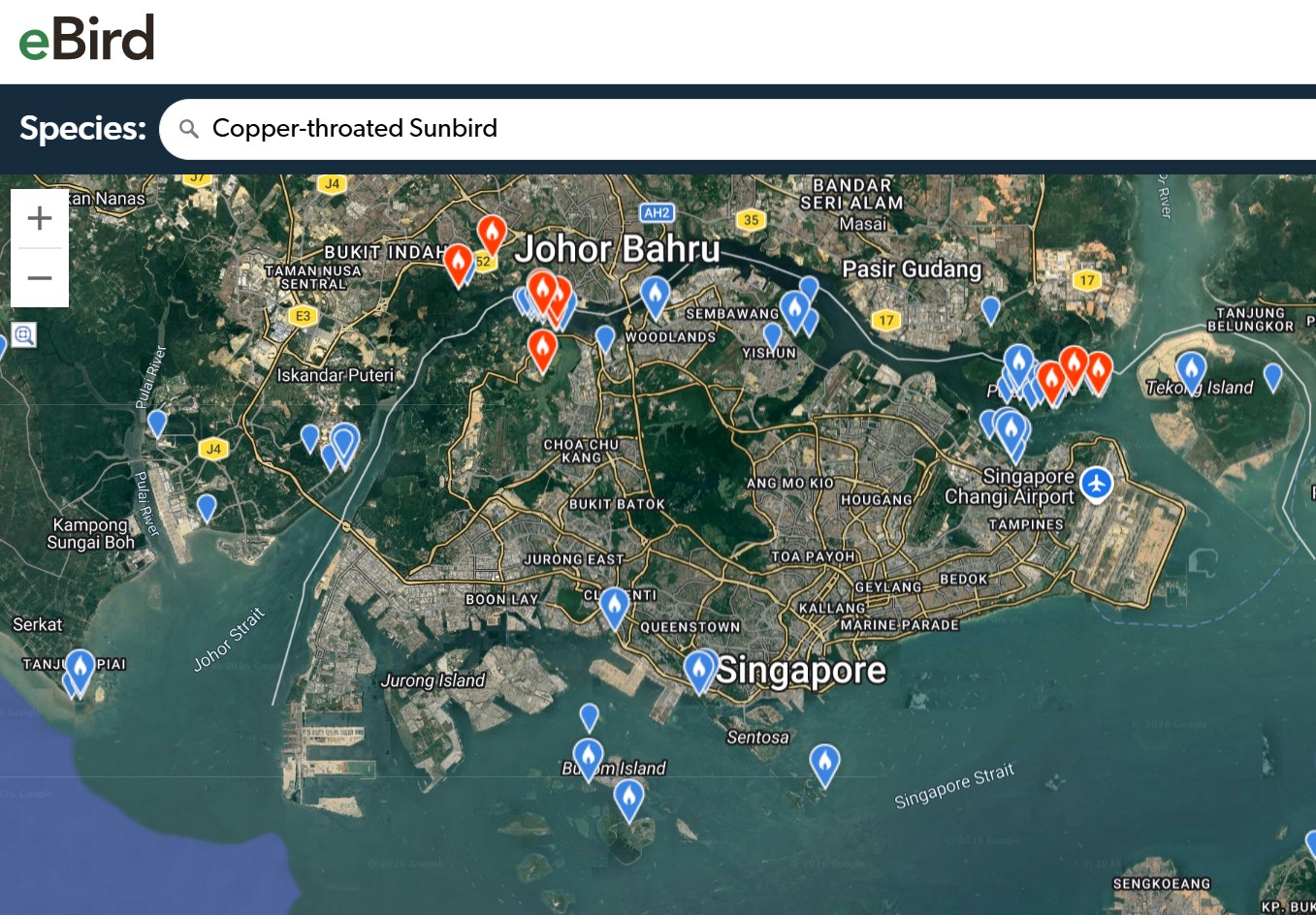
We hope to make the data on eBird as accurate as possible for science and conservation purposes, and also for you to use when planning your birding trips and learning about birds in Singapore. Taking Copper-throated Sunbird for example, for a new birder or a visitor to Singapore hoping to see this species, we hope that the eBird species map can be a reliable indication of where to look for it and help them correctly set their focus on finding it at Sungei Buloh Wetland Reserve or Pulau Ubin.
If you do come across a species outside of its usual location, it would be great if you could help to support your sighting with photos, videos, audio or detailed descriptions and respond to the moderators if contacted, so that your record can be assessed and confirmed into the eBird public output. If you are unsure of an ID, don’t feel shy to ask around in the community such as by posting on the Bird Sightings Facebook group!
We appreciate your patience and understanding regarding our work to make eBird better for us all, and hope that this article explains a little more about why our moderators have been (and will continue to be) checking through the records on eBird in Singapore. Thank you for your continued support in logging your checklists into eBird and we look forward to receiving more sightings from all of you in the community! Your contributions will go a long way in helping us have a better understanding of the diversity, abundance and distribution of birdlife in Singapore.