
Written by Jeff Tan, edited by Keita Sin.
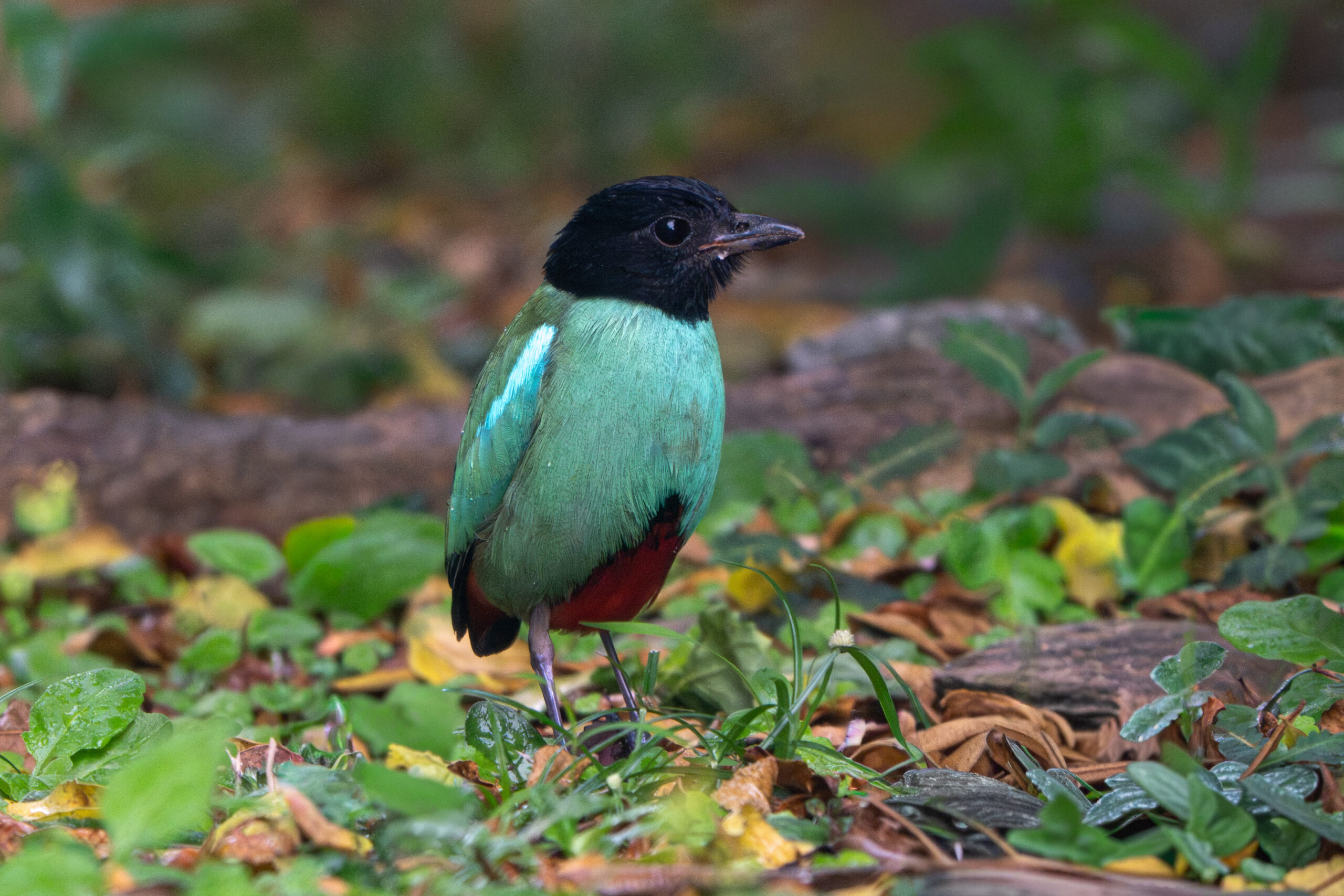
On 5 September 2025, Singapore received one of its regular migrants – a Western Hooded Pitta, first observed by M Lim. Despite hearing murmurs of it being a rare bird from the birding community, you might have chosen to pass on seeing this individual. After all, September is the start of the migratory season here in Singapore, and Western Hooded Pittas are just an unsurprising and uncommon migrant based on our Species Page. However, this individual sporting a black crown was identified as a “Sunda” Western Hooded Pitta – Pitta sordida mulleri, a different subspecies from our regular migrant, P. sordida cucullata. This was many birders’ first local sighting and drew a crowd, but did you know that this is not the first record of this unique subspecies in Singapore? We recently published an article compiling records from the region in BirdingAsia, and the following will be based on this article.
The Western Hooded Pitta is a widespread species of pitta common across Southeast Asia with six subspecies in total – two of which having been observed in Singapore, cucullata and mulleri. Both subspecies share the black face, bright green body and red vent, but there are distinct differences in their range, behaviour and how they look.
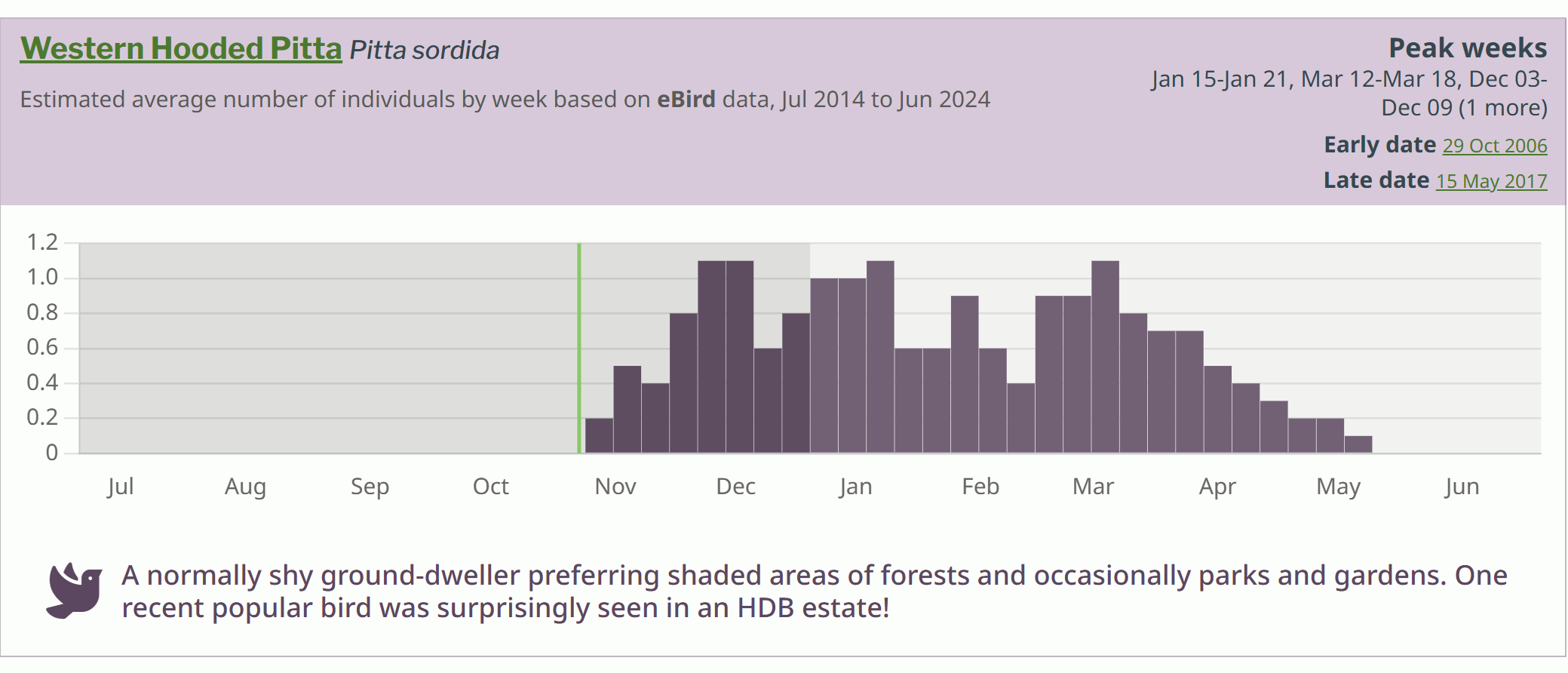
For cucullata, individuals breed from the Himalayan foothills in countries like China across to parts of Thailand and Cambodia, and winter in the Malay Peninsula, Singapore, and sometimes Sumatra and Java. In Singapore, we consider it a common non-breeding migrant, arriving in early November and migrating north by May.
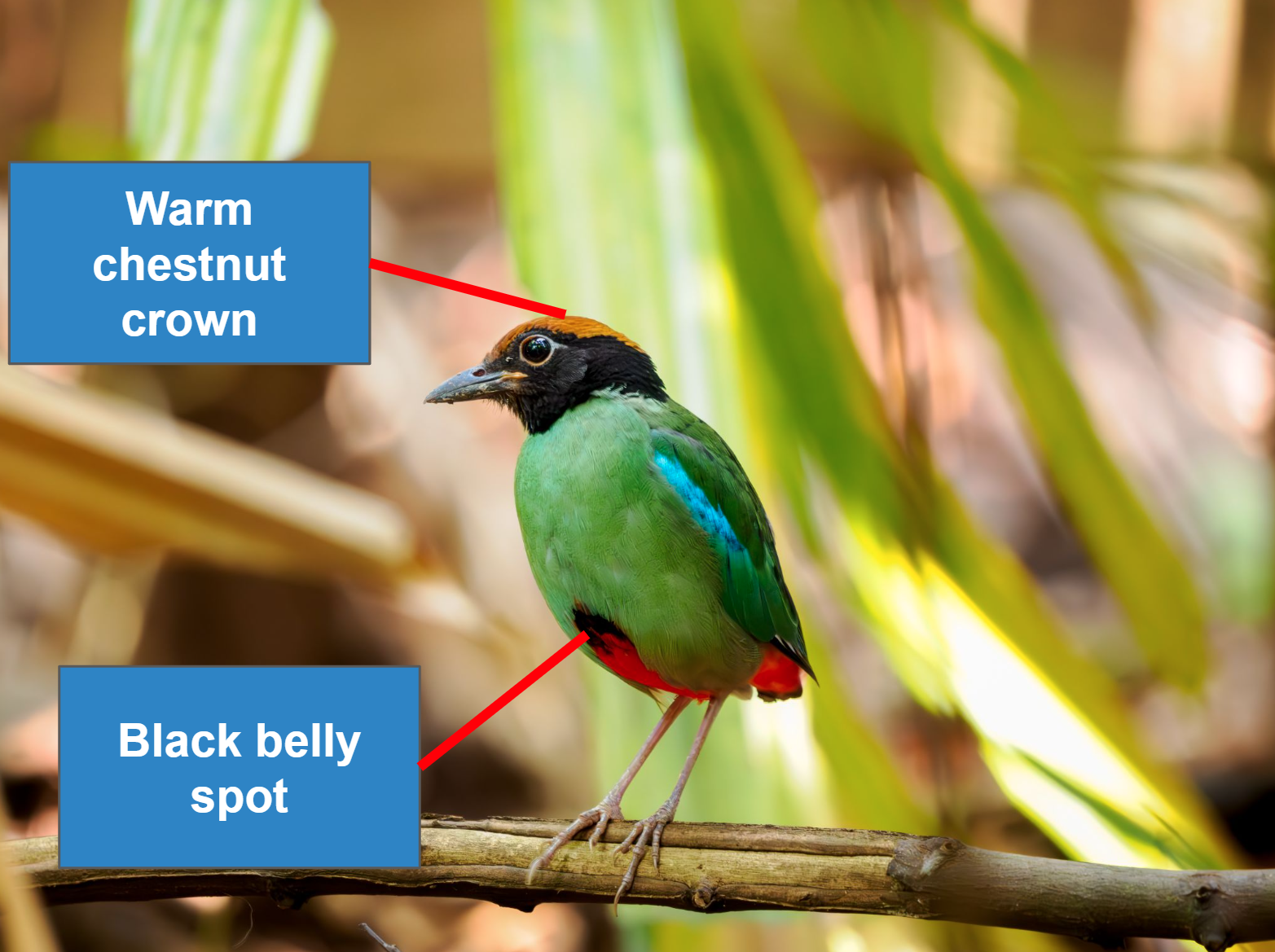
Individuals of subspecies cucullata can be identified by a full warm, chestnut crown on a black head, as well as a black belly spot above the red lower belly.
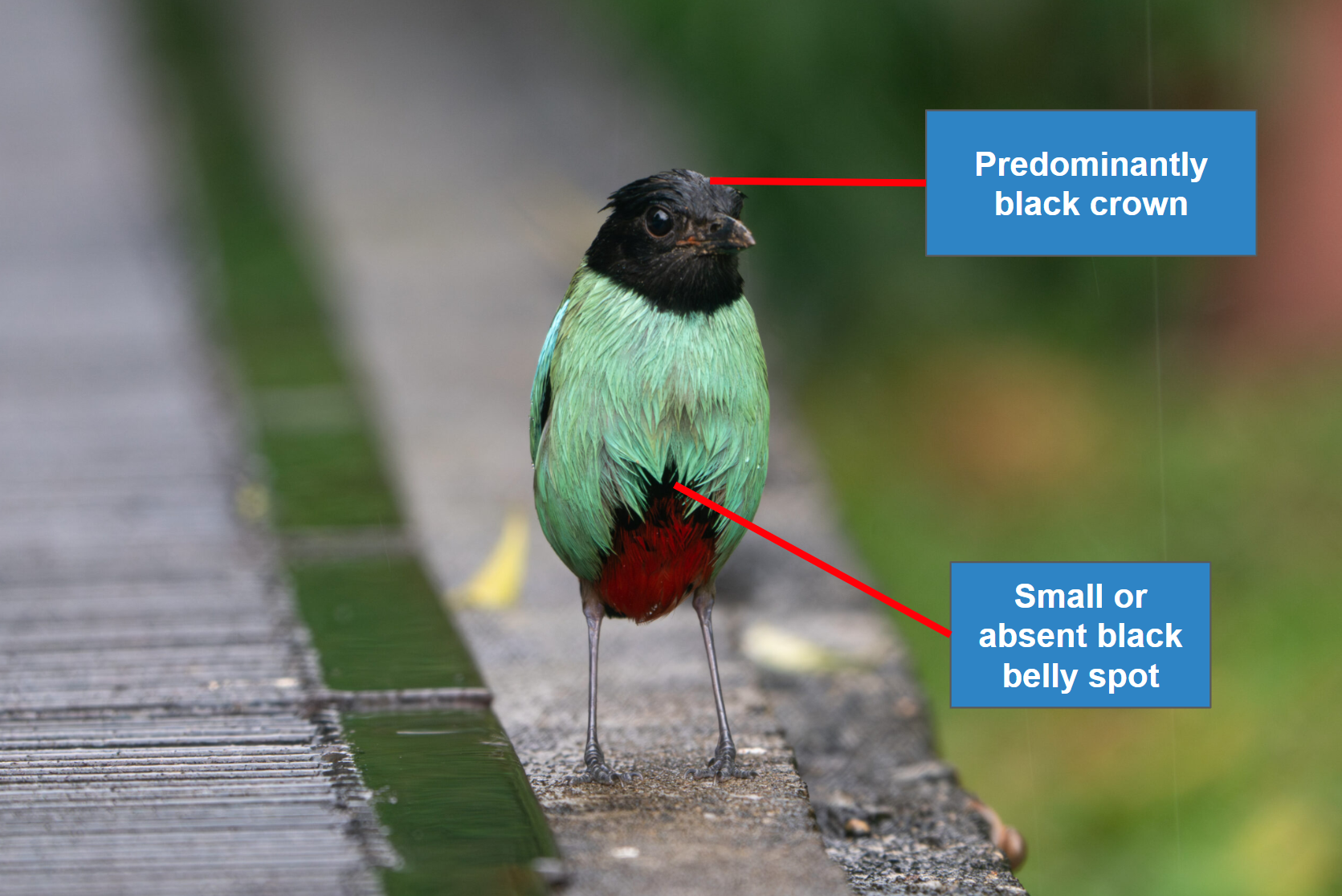
For mulleri, individuals are known to be resident on the Thai-Malay peninsula and other Greater Sunda islands. This subspecies has no historical records. However, their movements are relatively unknown along the peninsula, with records of this subspecies being sparse. To identify this bird, look for a predominantly black crown (juveniles may have a slightly browner crown), and a small or absent black belly spot compared to cucullata.
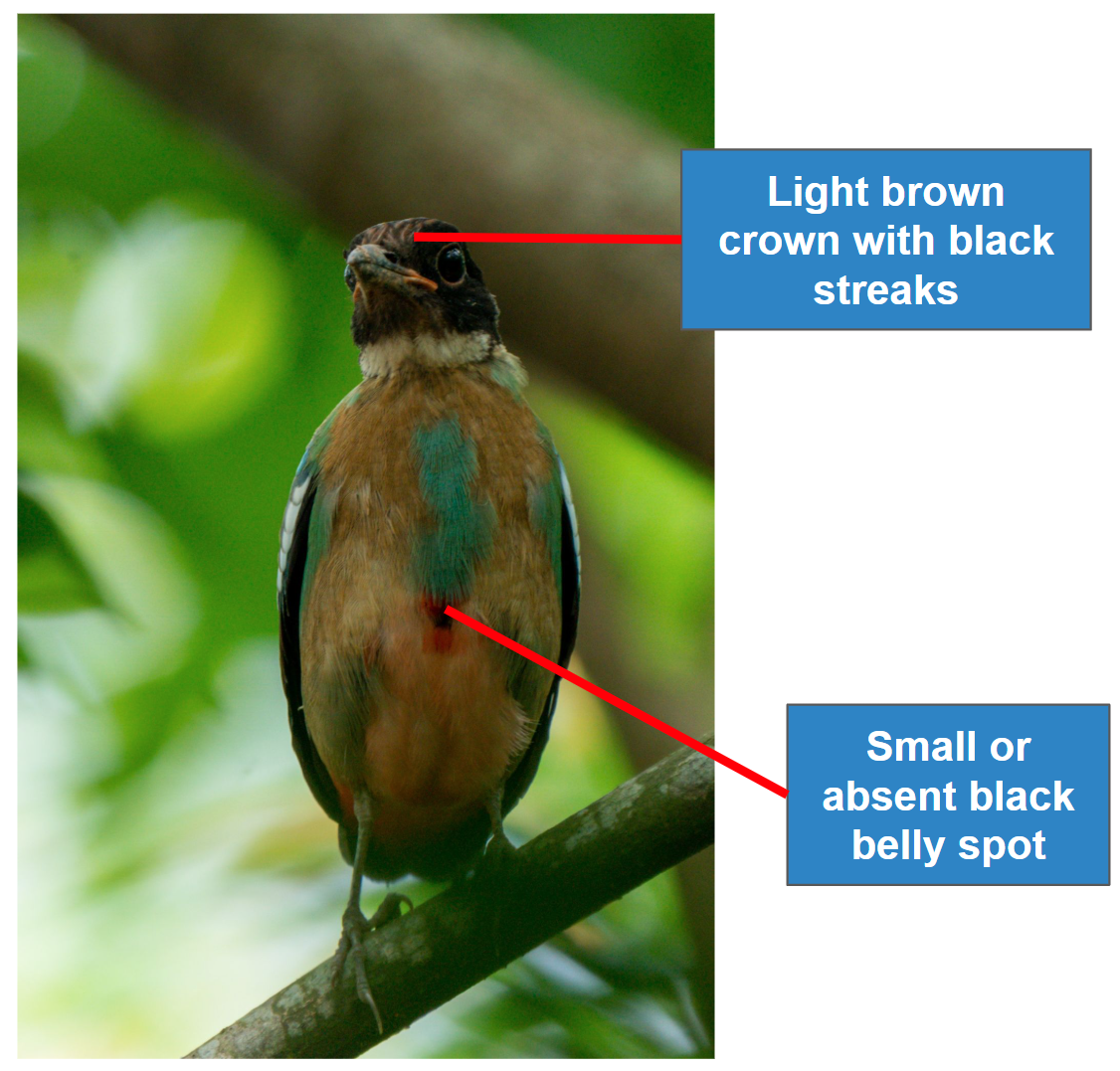
As of the writing of this article, there have been three confirmed sightings of mulleri in Singapore.
The first individual was discovered on 12 August 2024 at Raffles Place by a member of the public and was collected by the Lee Kong Chian Natural History Museum, where it eventually succumbed to its wounds. It has a fully black head, and its plumage aligned with other mulleri specimens in the museum, making it Singapore’s first record and museum specimen of a mulleri Western Hooded Pitta.
On 20 September 2024, I was on a walk in Jurong Lake Gardens when I spotted an immature Western Hooded Pitta. Given how uncommon that was, I stopped to take a look, and noticed different features: a black head with a light chestnut crown, black bill with a reddish-pink gape and a small black spot on its belly. To identify this mysterious juvenile pitta, a few factors had to be considered. Though cucullata are known to have a chestnut crown, a brownish crown is shared by the juveniles of mulleri. Juvenile cucullata are also thought to undergo a full moult to their adult plumage before migrating to Singapore, and will display a chestnut crown. Furthermore, the timing of the sighting is highly unusual – it was seen more than a month before the species’ early date of 29 October, strongly suggesting that this individual is the second sighting of mulleri in Singapore.
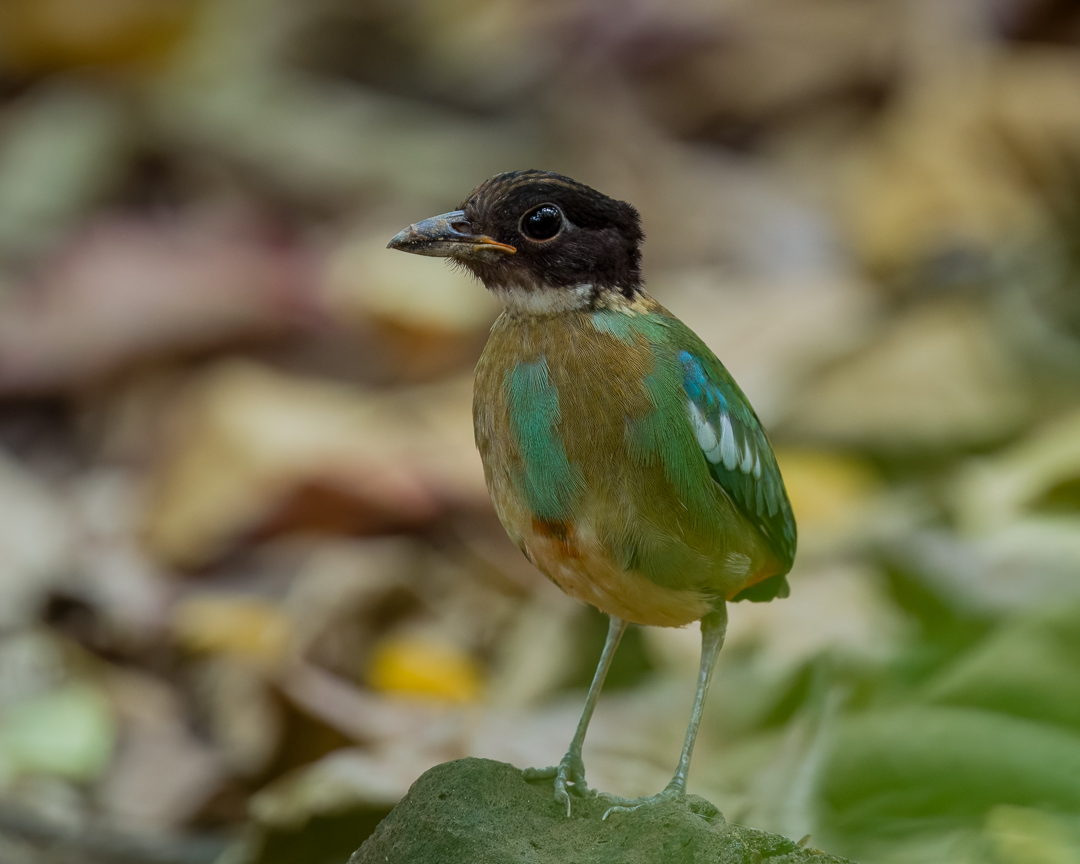
The third individual sparked the writing of this article, when it appeared at Sunbird Road on 5 September 2025 and the distinctive black head was shared throughout the birding scene. Many were able to see this subspecies for the first time in Singapore.
The movements of mulleri in the Thai-Malay Peninsula, where these individuals are thought to have come from, is poorly known and documentation of this subspecies is scarce. We currently do not know whether mulleri undergo annual movements, but the recent sightings of a few immature birds and a possible nesting record in the Malay Peninsula as well as our records in Singapore might be a sign of more sightings to come. Could there potentially be a shift in breeding range and colonisation of new habitat similar to the Blue-winged Pitta, leading to more sightings in the future?
To monitor this trend, please continue doing what birders do best: keep birding! Do keep a lookout for Western Hooded Pittas and listen for their calls during the “off-season”, as mulleri are likely to appear outside of the usual migration period. If you are unsure of your sighting, submit your record to the Singapore Bird Database or post a photo on platforms like Bird Sightings on Facebook! If the bird is unfortunately dead, please text the Dead Bird Hotline by the Lee Kong Chian Natural History Museum on Whatsapp (9876 2997) or Telegram (@deadbirdhotline), as it might be our next record!
References
Low, Bing Wen & Chia, Alfred & Tan, Gim & Yap, Wee & Lim, Kim. (2016). First documented records of the Blue-winged Pitta Pitta moluccensis breeding in Singapore. BirdingASIA. 26. 43-46.
Sin, Y.C.K., Narayanswamy, R., Tan, J.K.Y., Nyanasengeran, M. & Tan, Y.Y. (2025). The ‘Sunda’ Western Hooded Pitta Pitta sordida mulleri in Singapore. BirdingASIA, 43, 62-66.
Wells, D.R. (2007) The birds of the Thai-Malay Peninsula (Volume 2). London: Bloomsbury Publishing
Corrigendum: the wrong subspecies “cucullata” was written in the captions of photos 4 and 5, when it should be “mulleri“. The captions have been updated.